
CONSULTING
IP Operating Model Design
Rebalance people, process, technology.
Redesign your IP operating model to rebalance people, process, and technology across the prosecution lifecycle.
HOW IT WORKS
From current state to target model
The same sequence on every engagement, in your system, to your rules.
- 01
Current-state review
People, process and technology across the prosecution lifecycle are assessed.
- 02
Target model
The future operating model is designed with your leadership.
- 03
Design
Roles, workflows and system responsibilities are defined in detail.
- 04
Transition plan
A phased plan takes the team from today’s model to the target.
What it does
IP processes and workloads can become increasingly difficult to manage as portfolios grow, technology evolves, and responsibilities shift across attorneys, paralegals, operations teams, and external providers. IP groups are also under increasing pressure to reduce costs, improve turnaround times, and scale their operations without continually adding resources. Without a clear understanding of how work is being performed today, it can be difficult to identify bottlenecks, inefficiencies, capacity constraints, or opportunities to improve.
Trexo assesses your current IP operations and uses those findings to design a future-state operating model aligned with your business objectives. We analyze processes, workloads, roles, technology, and service delivery to identify opportunities for greater efficiency, scalability, and control. The resulting operating model and implementation roadmap provide a practical framework for redesigning workflows, determining where technology or external support can add value, and establishing measurable performance goals.
Key capabilities
Current-state process and workflow analysis
Workload, capacity, and performance assessment
Benchmarking and opportunity identification
Future-state operating model design
Implementation roadmap and KPI development
THE OUTCOME
What IP Operating Model Design changes
Greater operational efficiency
Improved scalability and capacity
Better alignment of people, processes, and technology
Clearer roadmap for operational improvement
IN THEIR WORDS
“Adler Pollock has been pleased to partner with Trexo Global. Their top-notch team has helped reduce risk in our Intellectual Property department while increasing the scalability of our IP practice. The team at Trexo is highly responsive, professional, and they know IP administration inside out. They’ve been a lifesaver to our firm.”
Dan Holmander, Shareholder
Adler Pollock & Sheehan P.C.
Who it’s for
- IP law firms
- Corporate IP teams
- Paralegal teams
- Docketing teams
- IP operations teams
COMMONLY ASKED QUESTIONS
About IP Operating Model Design
What is IP operating model design?
IP operating model design evaluates how an IP function operates today and defines how it should operate in the future. We assess processes, workloads, roles, controls, and technology, then design a future-state operating model with a practical implementation plan and measurable KPIs.
What does the assessment measure?
We map processes end to end and measure processing time, lead time, and workload. These measures help identify where costs, turnaround times, backlogs, and capacity constraints are concentrated.
Which IP processes can be assessed?
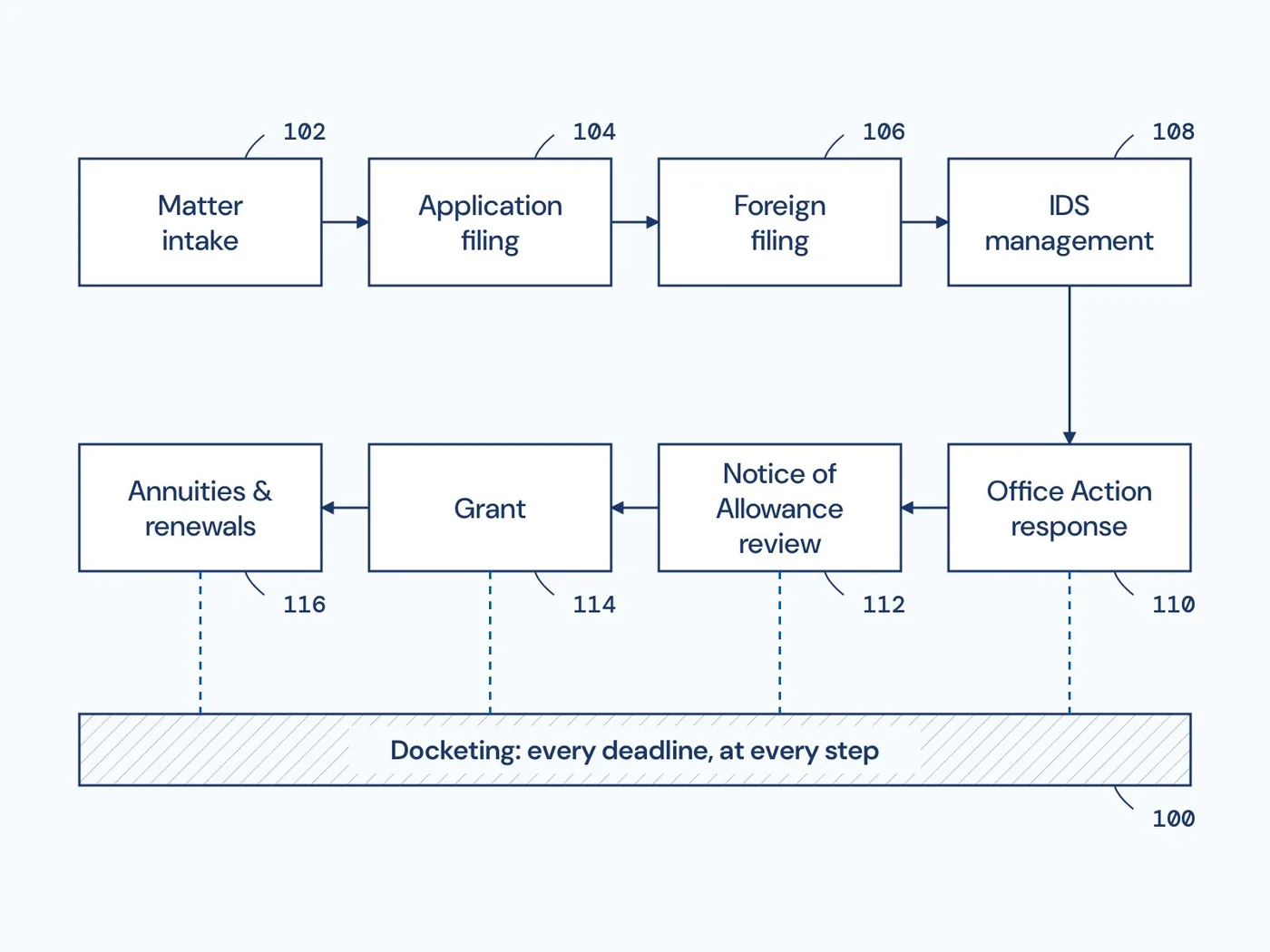
The scope can include docketing, application filings, foreign filings, IDS management, Office Action responses, Notice of Allowance review, annuities and renewals, and other IP processes. The assessment can be tailored to the processes and teams most relevant to your objectives.
What does the final deliverable include?
The engagement produces a comprehensive view of the current state, identified opportunities and priorities, a future-state operating model, and a sequenced implementation roadmap. The roadmap includes owners, dependencies, and KPIs to measure progress and results. The future state is designed to address the challenges you identify, whether they be cost, turnaround time, risk, or any other business issues your IP group is facing.
How long does an engagement take?
Timing depends on the number of processes, teams, and locations in scope. A focused assessment can typically be completed in weeks, while a broader operating model redesign is generally phased over a longer period.

Ready to talk about your portfolio?
Contact us and we will walk through your process, not a generic script.